Decentering the Human in Artificial Intelligence Research
Intellectual Enrichment & Philosophy | Seminar | CCL25260673
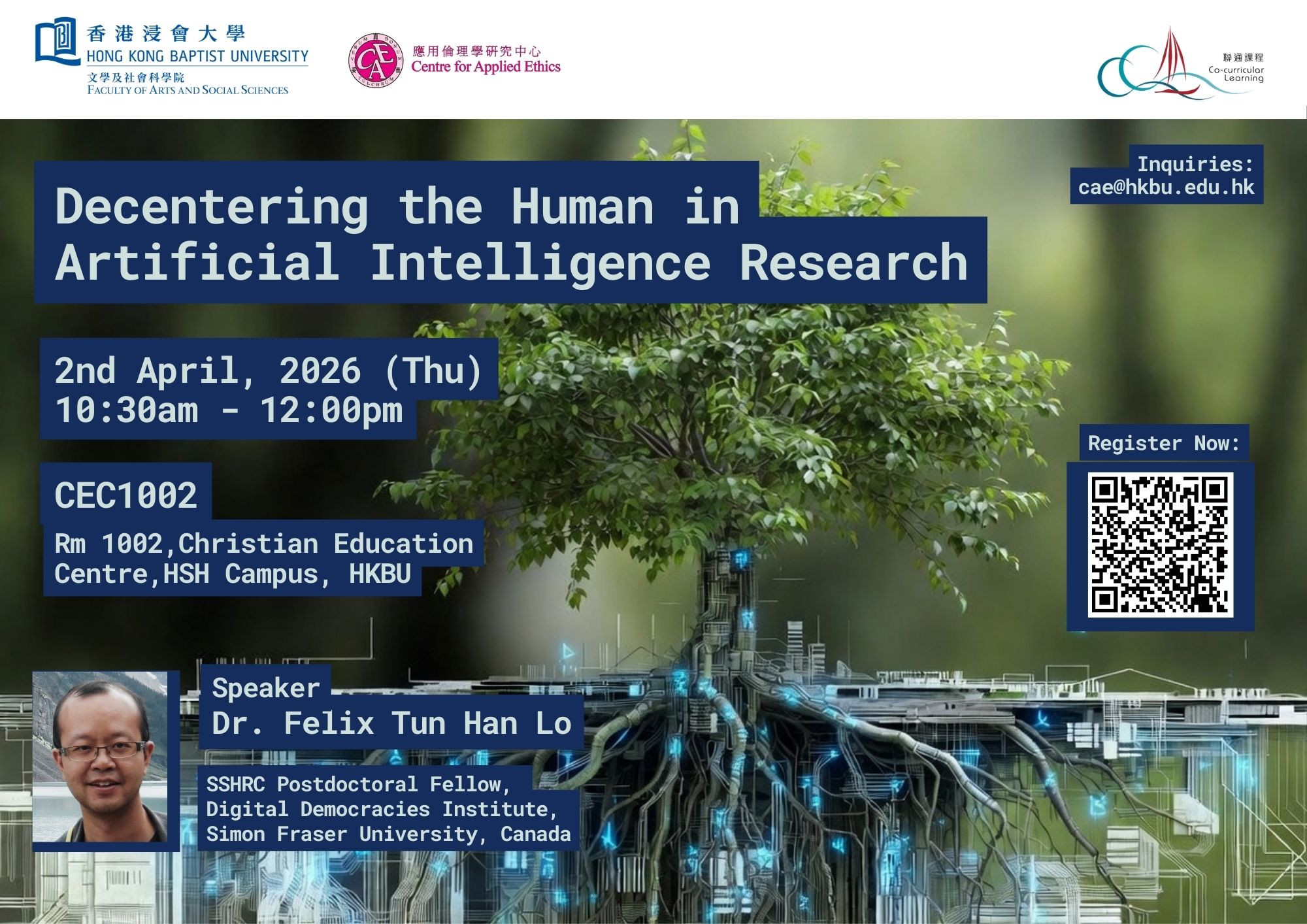
Recent advances in Artificial Intelligence (AI) have introduced a new paradigm for human-computer interactions. Rather than functioning as tools, computing devices increasingly behave like artificial colleagues capable of carrying out cognitive activities. But this paradigmatic shift has not deterred humans from desiring mastery over AI. Throughout the twentieth century, the human-centered exploitations of nature and of people considered as less-than-humans have led to both environmental and humanitarian crises. This raises critical questions about the human-centered approach to AI research. Is "human-centered" simply a proxy for western, liberal, and instrumentally rational individuality? Does it refer to the same "human" that considers indigenous and non-western epistemologies inferior? Leveraging theoretical works around biological symbiosis, indigenous philosophies, and non-western understanding of technology, this talk presents a critique of the human-centeredness in current AI research practices and deliberates the possibility of reframing such practices with an orientation that favors peer relationships between humans and nonhumans.
Registration
Registration Through External Link